
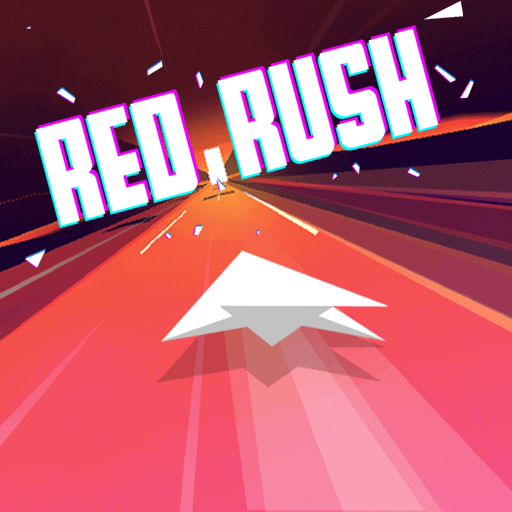






About Red Rush
Why can a route that felt manageable suddenly demand a much earlier decision? Red Rush increases its pace at timed intervals. You steer through a fast-moving course, keeping clear of red hazards while automatic forward movement brings the next obstacle closer. Surviving is the immediate task, but the time you remain in play also matters for progression.
A 30-second survival benchmark unlocks the next level, while speed rises every 15 seconds. That creates two useful milestones within a run: adapting to the first acceleration and carrying that adjustment through the unlock target. New stages give the avoidance challenge another setting, but the dependable habit remains the same: choose a clear route before the shrinking response window forces a hurried crossing.
How to Play Red Rush
Use A/D or Left/Right Arrow to steer away from red obstacles. Forward travel is automatic. Adapt as speed increases and survive for 30 seconds to reach the next-level unlock benchmark.
- Start an available level and establish how far a directional input shifts your position.
- Locate the clear route beside each approaching red hazard.
- Adjust your decision timing when the 15-second speed increase arrives.
- Reach the survival benchmark, then try the next available stage or extend the current attempt.
Controls & Timing
Time changes the approach
Every 15 seconds, the faster pace shortens the time before an obstacle reaches you. An input that worked late in the opening stretch may need to begin earlier afterward. Reassess the visible distance instead of repeating the same delay.
An unlock is a survival milestone
The 30-second benchmark gives an attempt a concrete progression goal. Reaching it is different from completing a fixed track. Preserve a clear route near the milestone instead of assuming the final few seconds will be easier.
A red hazard defines the space to avoid
First identify the obstruction, then choose the usable space beside it. Steering without a destination can trade one threatened position for another. Include the next hazard in the decision when both are visible.
Controls
| Input | Action | When to use |
|---|---|---|
| A / Left Arrow | Move left | Enter a clear route on the left |
| D / Right Arrow | Move right | Enter a clear route on the right |
High Score Tips
- Use the first acceleration as a diagnostic. If most attempts end soon after the pace changes, adjust when you begin choosing the route. Repeating the opening at the same comfort level will not by itself solve that later timing problem.
- Choose the destination before crossing. Locate a usable gap and steer toward it deliberately. A panicked direction change can leave you between safe routes when the obstacle arrives.
- Reduce optional changes near an unlock. A clear position does not need to be replaced simply because another gap looks larger. Keeping a workable line reduces exposure during the seconds that complete the survival target.
- Distinguish a late decision from excessive movement. After a collision, ask whether the chosen gap was wrong or the input carried you beyond it. Those failures need different corrections, even when both happen beside the same red barrier.
Key Features
- Automatic forward travel. Directional steering is the central avoidance action.
- Timed speed increases. The pace rises at 15-second intervals.
- Survival-based progression. A 30-second benchmark opens the next stage.
- Red hazard cues. Obstacles give each steering choice an immediate spatial target.
Frequently Asked Questions
What are the steering controls?
Use A/D or the Left and Right Arrow keys to move sideways. The course advances automatically, so focus on selecting a clear route rather than looking for a forward accelerator.
Why does the game suddenly feel faster?
The pace increases every 15 seconds. Begin reading the next gap earlier after that change, because a delay that was comfortable at the start may no longer leave enough time.
How do I unlock the next level?
Survive for 30 seconds to reach the progression benchmark. Treat it as an endurance target: the important action is avoiding a collision throughout the attempt, not collecting a particular object.
Is unlocking a level the same as finishing a track?
No. The progression target is based on survival time. Reaching that milestone opens another challenge rather than establishing that you have crossed a conventional finish line at the end of a road.
Should I keep switching sides to stay safe?
Only change position when the visible layout gives you a reason. Repeated crossings introduce extra timing decisions and can place you in front of the next hazard before you have read it.