



About OvO
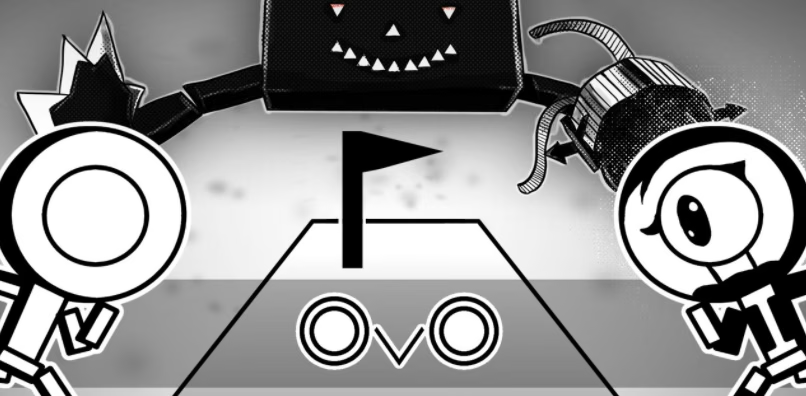
How can one movement button solve two different obstacles? OvO makes the answer depend on the character’s state. Down can produce a slide while running or a downward smash while airborne, and the surrounding platforms determine which action is useful. You guide a stick figure through compact courses that reward deliberate combinations rather than isolated jumps.
Reaching the exit is the first goal. Coins and cosmetic unlocks provide another reason to revisit a route, while increasingly demanding layouts ask for cleaner links between actions. A short passage might involve sliding beneath a ceiling, jumping from that approach, and landing where the next movement can begin. Understanding those connections is more useful than treating every obstacle as a separate button press.
How to Play OvO
Move with Left and Right Arrow, jump with Up Arrow, and use Down Arrow to slide on the ground or smash while airborne. Combine the actions to avoid traps and reach the level’s exit.
- Identify the next opening and decide whether it needs a jump, slide, or downward action.
- Approach with the character in the correct state for that move.
- Link the landing or slide exit to the next platform action.
- Reach the goal, then revisit optional coins on routes you understand.
Controls & Timing
Down depends on where you are
The same key has different effects on the ground and in the air. Check the character’s state before using it. A planned slide can become a downward action if you press after leaving the supporting surface.
Actions can strengthen a sequence
A slide and a jump are not merely alternatives; the game lets movement actions connect into useful combinations. Learn the basic response in a clear section before relying on a chained move beside spikes. The receiving platform should still determine the target.
Transparent surfaces invite a different approach
Some passages use breakable or transparent floor sections that respond to a downward smash. Approach from above and identify the space below first. Opening a route is useful only when you can continue through it safely.
Controls
| Input | Action | When to use |
|---|---|---|
| Left / Right Arrow | Move horizontally | Approach the next obstacle |
| Up Arrow | Jump | Reach a platform or link a parkour action |
| Down Arrow on the ground | Slide | Pass beneath a low opening |
| Down Arrow while airborne | Smash downward | Descend through an appropriate breakable passage |
High Score Tips
- Check state before pressing Down. Locate the character relative to the floor. This avoids asking for a slide after the character is already airborne and receiving a different action than the passage needs.
- Practice combinations in readable space. Learn how the end of a slide connects to a jump before attempting a narrow trap corridor. Familiarity with the transition leaves more attention for the actual landing.
- Inspect below a smash target. A breakable floor is an entrance, not a complete destination. Check what lies beneath it so the downward action does not place the character directly into another hazard.
- Separate the coin route from the first finish. Complete the level with a reliable sequence, then add the collection detour. This makes it easier to see which extra movement is responsible when a previously clean section becomes difficult.
Key Features
- State-dependent controls. Down Arrow produces different actions on the ground and in the air.
- Linked parkour movement. Slides, jumps, and smashes combine across compact routes.
- Platform exits. Each course gives the movement sequence a completion goal.
- Optional coins and skins. Collection adds replay goals around the core parkour challenge.
Frequently Asked Questions
Why does Down sometimes slide and sometimes smash?
The action depends on whether the character is supported or airborne. Plan the input together with that state, especially when a low passage begins close to an edge.
How do I break a transparent floor?
Approach the appropriate surface from above and use Down Arrow while airborne to perform a smash. Inspect the space underneath before committing, because the route continues after the floor breaks.
Should I learn all combinations immediately?
Start with the individual jump and slide responses, then connect them in a clear section. A familiar transition is easier to use safely once a course surrounds it with spikes and narrow platforms.
Are coins necessary for every basic finish?
Treat the exit as the main completion target and coins as an additional collection goal. Learn the route first so you can judge whether a detour fits the movement sequence.
Why do level counts differ between websites?
Different browser builds and updates can present different totals. This guide focuses on the movement used in the referenced version instead of promising that every release contains the same set of levels.