






About Space Waves
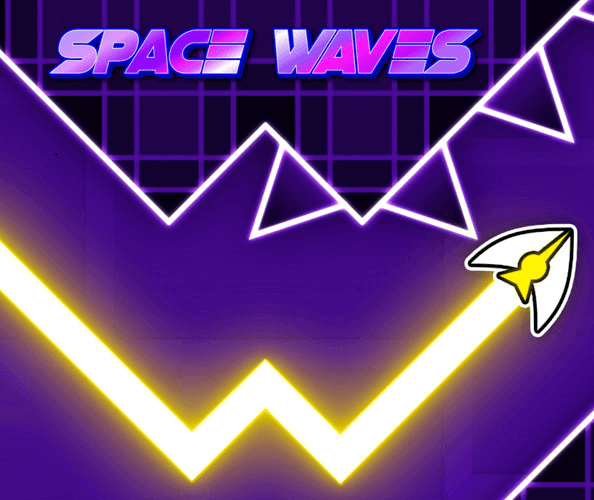
Space Waves places a small arrow inside corridors whose angles determine the rhythm of your flight. You hold to climb and release to descend, turning a simple input into a continuous series of decisions about height. Spikes, walls, and rotating hazards can interrupt either direction, so the important question is where the next reversal should happen.
The game offers level-based play as well as an endless challenge. A level gives you a route to understand and complete; an endless attempt emphasizes continuing survival. Learning the basic flight on a more forgiving course helps you recognize why a tight passage fails, instead of responding to every collision by tapping more rapidly.
How to Play Space Waves
Hold the left mouse button to move the arrow upward and release it to move downward. Choose a level or an endless run, avoid contact with hazards, and follow the open corridor toward the selected objective.
- Select a manageable course and observe the first open section.
- Hold to gain height before a rising floor blocks the descending line.
- Release early enough to clear upper hazards and enter the next gap.
- Reach the level’s finish or keep surviving in the endless challenge.
Controls & Timing
Inclines need advance preparation
An upward-sloping corridor asks the arrow to gain height before the space closes. If you wait until it is already against the lower boundary, the next hold may be too late. Read the floor angle while there is still room to climb.
Short alternation fits narrow spaces
A long climb or descent may leave the available corridor. Use smaller changes when obstacles constrain both sides, then extend a segment only when the opening allows it. The shape of the route should set the rhythm.
Controls
| Input | Action | When to use |
|---|---|---|
| Hold left mouse | Climb | Gain height for the next opening |
| Release left mouse | Descend | Move below an upper hazard |
High Score Tips
- Choose difficulty for a specific skill. Use a wider course to learn duration and a tighter one to practice reversals. Increasing difficulty is more useful when you know which movement you are trying to improve.
- Read corners as pairs. The first corner tells you when to rise or fall; the next tells you where that movement must finish. Linking the two avoids an otherwise successful dodge with no usable exit.
- Keep the arrow away from both extremes. When the corridor allows it, preserve space above and below. That margin gives you time to begin a reversal before either boundary becomes an immediate collision threat.
- Diagnose the first wrong segment. A final impact may follow a hold that was too long several movements earlier. Find the segment that first displaced the arrow from the safe corridor and adjust that duration.
Key Features
- Diagonal arrow flight. Holding and releasing create a controllable rising-and-falling path.
- Angled obstacle courses. Walls and hazards shape where reversals can safely happen.
- Level completion. Individual courses provide routes to learn and finish.
- Endless challenge. A separate mode emphasizes sustaining control over a longer attempt.
Frequently Asked Questions
Does the arrow rise when I release the mouse?
No. Holding the left mouse button sends it upward, and releasing sends it downward. Learn both states before attempting a tight course, because release is just as important as the press.
Should I start with the hardest level?
A wider, easier course is more useful for learning hold duration and reversal timing. Once those movements become predictable, tighter corridors provide a clearer test of the same skills.
Why do upward slopes catch me?
They reduce the space available to a descending arrow. Begin the climb before reaching the incline’s restrictive point, using the visible floor angle to judge when that change is needed.
Is rapid clicking always the solution?
No. Short alternation helps in some narrow passages, but an open climb may need a longer hold. Match the duration to the corridor instead of applying one rhythm everywhere.
How does an endless attempt differ from a level?
A level asks you to complete its course, while an endless attempt asks you to keep surviving. The same flight control applies, but your immediate objective changes from reaching an endpoint to extending the run.