






About Geometry Arrow
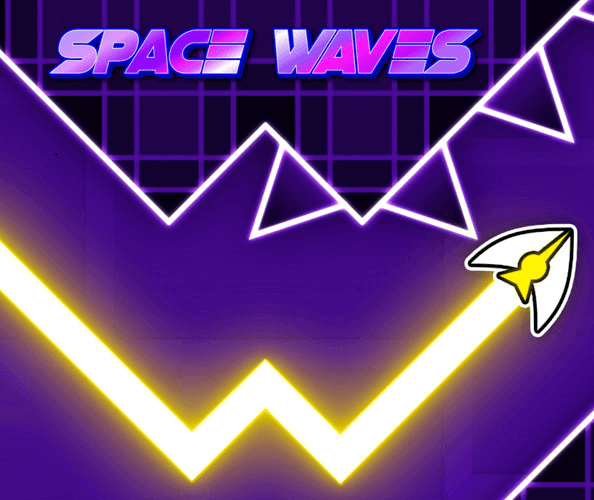
Geometry Arrow rewards planning a line rather than reacting to every pointed shape separately. The arrow advances through a geometric corridor, while holding and releasing the control determines whether its path rises or falls. Spikes, walls, and angular openings constrain where each reversal can happen. Reaching the ending portal requires the whole sequence to fit.
The most useful strategy is to connect nearby openings. A climb that clears the current spike can still finish too high for the next passage. Start by finding the destination of a short sequence, then decide where to change direction within it. This turns a busy cave into a few understandable changes in height instead of a stream of unrelated emergencies.
How to Play Geometry Arrow
Hold the left mouse button or Space to rise, then release to descend. Keep the arrow inside the open corridor, avoid spikes and walls, and reach the portal at the end of the level.
- Select a level and identify the first open passage.
- Begin a climb or descent that leads toward its clear space.
- Reverse before the boundary prevents the next movement.
- Link the openings together until you reach the level’s exit.
Controls & Timing
A corner determines a reversal
The arrow needs to change its diagonal direction before the corridor stops supporting the current path. Look at the meeting point of the floor and ceiling boundaries. That geometry tells you when a hold should become a release, or the reverse.
Forward travel keeps the decision moving
The arrow continues advancing while you adjust its height. A correct vertical direction chosen too late can still reach a wall. Prepare the reversal as an arrival-time decision, not merely a response to the arrow being high or low.
Controls
| Input | Action | When to use |
|---|---|---|
| Hold left mouse / Space | Rise | Enter a higher part of the corridor |
| Release the active input | Descend | Pass beneath a hazard or follow a lower opening |
High Score Tips
- Plan two openings together. Use the first opening to set the immediate height and the second to decide where that movement must finish. This prevents a safe dodge that has no usable continuation.
- Shorten the segment in tight spaces. A low ceiling limits how long a hold can last. Respond to that space with a smaller climb instead of copying the duration from the previous open section.
- Use a visible edge as the timing reference. Pick a corner that appears just before a difficult reversal. Comparing the arrow’s position there helps you distinguish an early release from a late one.
- Keep a failed segment small. When a passage repeatedly causes trouble, change the timing of that one reversal. Altering every input makes it harder to see which movement actually needed correction.
Key Features
- Hold-and-release movement. One control produces the arrow’s rising and falling path.
- Geometric cave passages. Sloped boundaries shape the timing of each reversal.
- Portal-based completion. Levels give the flight a defined destination.
- Immediate collision pressure. Contact with hazards interrupts the attempt and invites another approach.
Frequently Asked Questions
Does releasing stop the arrow?
No. Releasing sends the arrow downward while the course continues moving forward. Plan the descending part of the route as carefully as the climb rather than treating release as a pause.
Why does a correct climb still hit a wall?
It may have begun too late for the approaching opening. Height and arrival time work together, so start preparing the reversal before the corridor becomes too narrow to support it.
Is a steady tapping rhythm always useful?
Only while it fits the shape of the corridor. Longer climbs, lower ceilings, and angled passages need different durations, so let the visible space determine the rhythm.
How do I know a level is complete?
The objective is to reach the portal at the end of the route without crashing. Focus on connecting safe passages to that destination rather than assuming the mode is an endless distance run.
What should I practice first?
Choose a manageable corridor and learn to reverse at recognizable corners. Consistent short sequences provide a stronger foundation than attempting a difficult route with a different reaction on every retry.